
Tiger Honey field note · 5 minute read
What does wild forest honey actually taste like?
A practical guide to the layered flavour, natural variation and best ways to use raw wild forest honey.
There is no single forest flavour
Wild forest honey is shaped by whatever is flowering within reach of the bees. That is why a jar can move from bright blossom notes to deeper, almost resinous warmth without tasting perfumed or artificially flavoured.
We chose this variety for people who want honey with a beginning, middle and finish. On the spoon it opens floral, becomes rounder as it warms, then leaves a long honeyed note rather than a sharp sugar hit.
Why one batch may not look exactly like the next
Raw honey is an agricultural food, not a standardised syrup. Rainfall, flowering times and temperature all affect colour and texture. Crystallisation is normal and does not mean the honey has spoiled.
If a batch sets, stand the closed jar in gently warm water. Avoid boiling water or a microwave if you want to preserve the character that made the honey interesting in the first place.
How we use it
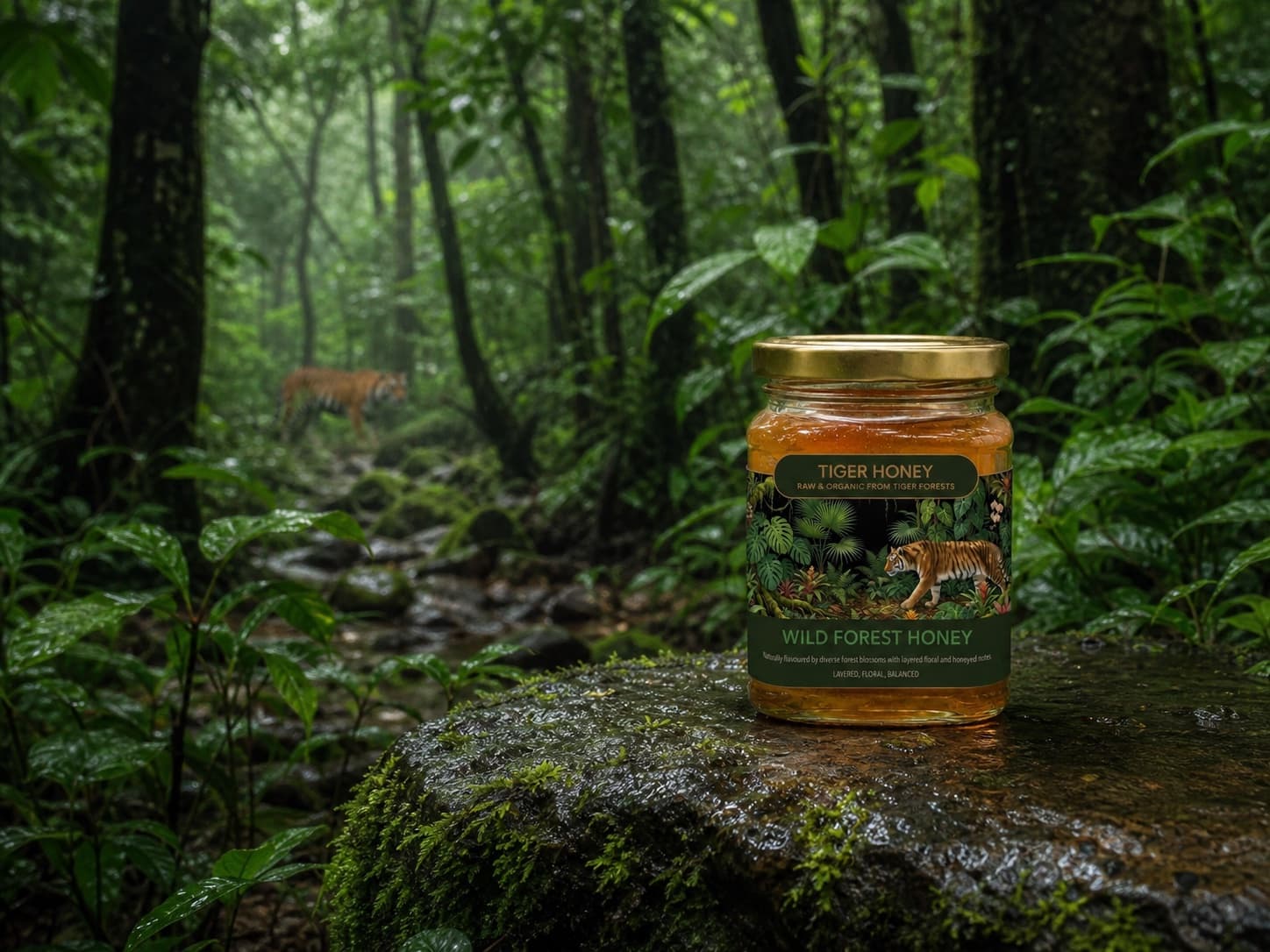
Wild Forest Honey is the jar we reach for with thick yoghurt, porridge, toast or a mature cheese. Start with less than you think you need; its layered finish carries further than a neutral table honey.